
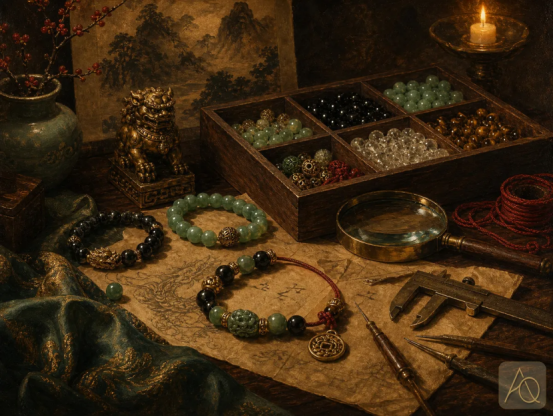
Gemstone bracelet materials can feel confusing when you are new to this category. A listing may mention pearl, clear quartz, citrine, lapis lazuli, tiger’s eye, smoky quartz, agate, or sterling silver details. Then another page uses soft, poetic names and barely says what the bracelet is made from. If you are trying to buy a natural stone bracelet online, that gets old quickly.
This guide keeps things simple. Think of it as the friendly version of reading a product page before you spend money. You do not need to become a gem expert. You just need to know what information should be clear.
What “gemstone bracelet materials” means
The phrase covers the visible stones, pearls, metal details, spacers, charms, stringing, and finishing parts used in a bracelet. The beads get most of the attention, but the smaller parts affect the look and feel too.
A clear product page should name the materials plainly. “Freshwater pearl and clear quartz” tells you something. “Beautiful natural energy stone” does not tell you enough.
Why material clarity matters
Material clarity helps you avoid disappointment. If you know what the bracelet includes, you can better understand the price, the look, the care needs, and whether it fits the person who will wear it.
It also builds trust. A brand that explains materials clearly usually feels more reliable than one that hides behind vague words. This is especially important for online jewelry, because you cannot hold the bracelet before buying it.
Common materials you will see
Pearl
Pearl adds softness and polish. It can make a gemstone bracelet feel more gift-ready and easier to wear with daily outfits. Pearls may vary in shape, tone, and surface, which is normal.
Clear quartz
Clear quartz gives brightness. It pairs well with pearl, amethyst, citrine, lapis, and many other stones because it visually lightens the bracelet. It is useful when a design needs a cleaner, fresher look.
Citrine
Citrine brings warm golden tones. It often works well for people who like neutral outfits, autumn colours, or jewelry that feels sunny without being flashy.
Tiger’s eye
Tiger’s eye has an earthy striped look. It gives movement and warmth, especially in bracelets designed for everyday wear. It can sit nicely with brown, black, cream, denim, and gold-toned details.
Lapis lazuli
Lapis lazuli is deep blue and often feels composed, classic, and a little bold. It pairs beautifully with pearl or silver details. For someone who wears navy, white, black, or cream, lapis can be surprisingly easy.
Amethyst, agate, and other stones
Amethyst brings purple colour. Agate can show natural texture and pattern. Malachite, amazonite, fluorite, moonstone, and other stones each add their own colour story. The right choice depends less on a perfect rule and more on the wearer’s style.
Natural variation is normal
Natural stones and pearls are not identical from piece to piece. Colour, surface, pattern, and shape can vary. That is part of the appeal. The important thing is whether the brand tells you this before purchase.
If a page makes every bracelet look perfectly identical, but never mentions variation, be cautious. Natural-looking materials usually come with small differences. Those differences can make the bracelet feel more personal, as long as the seller sets the expectation honestly.
What affects price and quality
Price is shaped by more than the stone name. Bead selection, polish, colour consistency, pearl quality, metal details, stringing, finishing, photography, packaging, and after-sale service all matter. A bracelet can use a familiar stone and still feel better because the overall execution is cleaner.
This is where cheap alternatives can disappoint. The listing may use the same broad material name, but the bracelet may have unclear sizing, rough finishing, weak stringing, or photos that hide the actual surface. A lower price is not automatically wrong, but the page should still answer practical questions.
What material descriptions should not do
A bracelet can be meaningful without making unrealistic claims. It is fine to enjoy personal symbolism. Many people choose a stone because the colour, texture, or story feels right to them. But a product page should not make the bracelet sound like a shortcut or a promised result.
Clear, grounded language is more trustworthy. It lets the buyer enjoy the emotional side without feeling pushed into a promise that jewelry cannot honestly make.
Care basics for gemstone and pearl bracelets
Pearls and stones prefer gentle handling. Keep bracelets away from perfume, lotion, cleaning products, water, heavy pulling, and exercise. Store them separately so harder surfaces do not rub against softer materials. Wipe gently with a soft cloth after wear.
This sounds small, but it helps the bracelet last. Care is also a sign that the brand understands the product. If a store sells pearl or gemstone jewelry but gives no care guidance at all, that is worth noticing.
How to judge a bracelet page quickly
Ask five questions. Does it name the materials? Does it show size options? Does it explain natural variation? Does it give care advice? Does the tone feel believable?
If the answer is yes, you are in a better place. If the page is full of big promises but light on details, keep looking. Good product information should make you feel calmer, not more confused.
Where Aura & Qi fits
Aura & Qi focuses on pearl and gemstone bracelets with clear material language, soft styling, and a gift-ready feel. The brand’s approach is simple: show the materials, explain the everyday use, and leave space for personal meaning.
That kind of honesty is useful when shopping online. It helps a first-time buyer compare designs without feeling talked down to or rushed.
Conclusion
You do not need to be a gemstone expert to buy a good bracelet. You just need clear materials, realistic photos, size guidance, care advice, and a brand voice that does not overdo it.
Explore Aura & Qi if you want gemstone bracelet materials presented in a way that feels clear, warm, and easy to shop.
FAQ
What are the most common gemstone bracelet materials?
Common materials include pearl, clear quartz, smoky quartz, citrine, tiger’s eye, lapis lazuli, amethyst, agate, malachite, fluorite, amazonite, and silver details.
Are natural stone bracelets identical to the photo?
Not always. Natural stones and pearls can vary in colour, pattern, surface, and shape. Small differences are normal.
Is pearl good for everyday bracelets?
Yes, with gentle care. Pearl adds softness and works well with gemstone designs, but it should be kept away from chemicals and water.
How can I tell if a bracelet material description is trustworthy?
Look for clear material names, size options, care guidance, realistic photos, and a note about natural variation.
Do gemstone bracelet materials need special care?
Yes. Avoid perfume, lotion, water, cleaning products, heavy pulling, and exercise. Store separately and wipe gently after wear.